

On women’s skin
On women’s skin
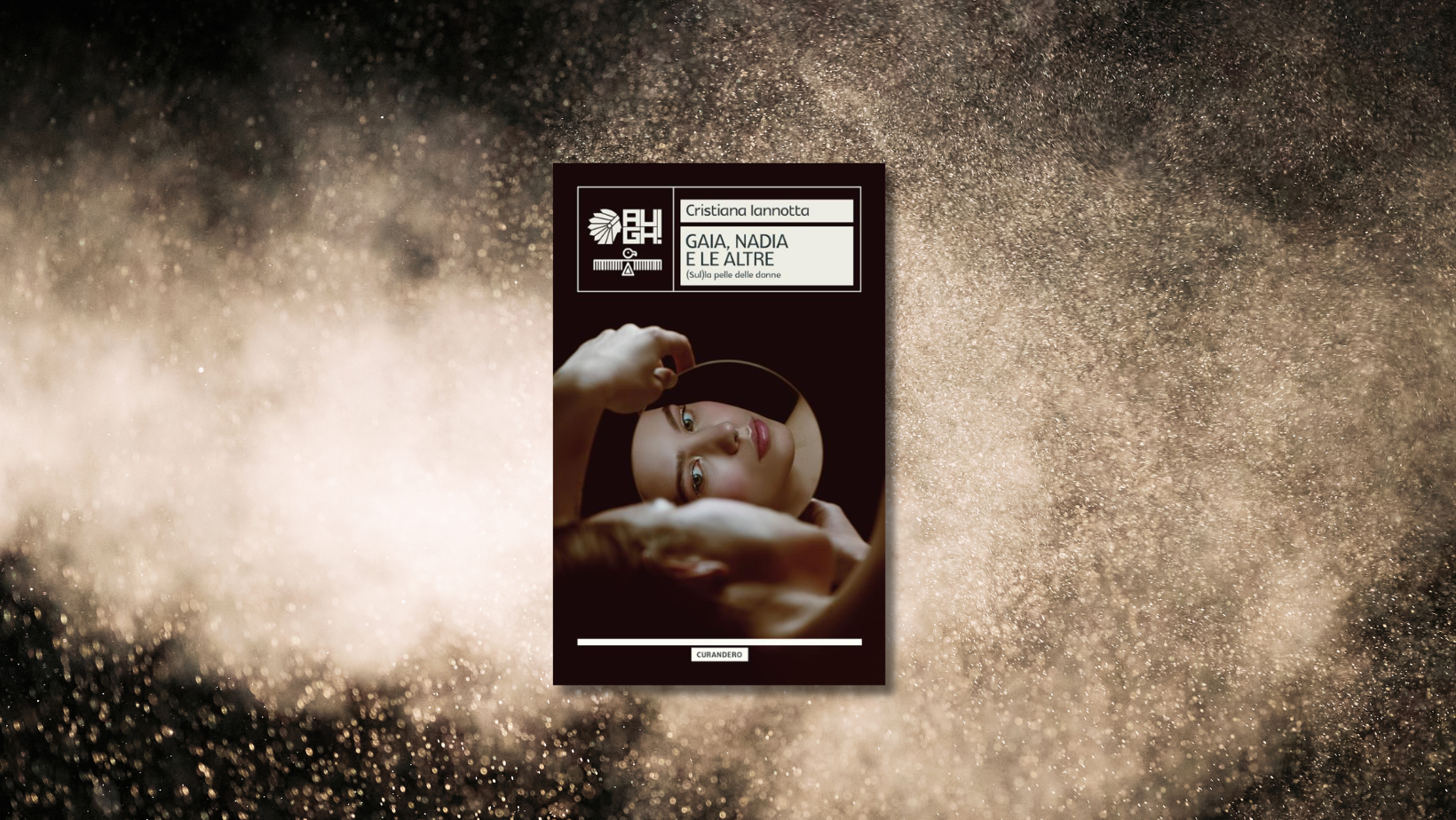
Cristiana Iannotta, Gaia, Nadia and the others. (Sul)la pelle delle donne[1]. (Augh! Curandero, 2022)
A book about women who embark on assisted reproduction treatments: ‘women who, with enormous sacrifice, are gaining an extraordinary normality that, for others, comes extremely natural’.
Review by Claudia Mazzilli
When Paula, a freelance journalist, began collecting testimonies on medically assisted reproduction, she had no idea that she would end up telling stories of physical and psychological violence against women: “Women’s skin is so resistant that no one pays attention anymore when avalanches of words, gestures, insults, prejudices, prohibitions and accusations are hurled at them. Often the caresses, on the other hand, are much fewer and are not enough to soothe certain types of widespread and overly invasive pain “(p. 10).
By attending a conference on assisted reproduction, Paula comes into contact with a variety of women: many are aware that they are women even if they are not mothers; however, they want to give birth to a child at all costs. Others are aware that family ties are not based on blood relations but on relationships; yet they want the same donor for children conceived through artificial insemination, so that they are true siblings, “by nature”.
Paula knows “women who, with enormous sacrifice, are gaining an extraordinary normality that, on the other hand, for others comes extremely natural” (p. 19). Because after the age of thirty-five, the chances of conceiving and carrying a pregnancy to term are drastically reduced, or you are more likely to have multiple births. This is what happened to Eleonora, mother of four children, all born through assisted reproduction: after her firstborn, the other three cryopreserved embryos all got implanted, and triplets were born. “I thank everyone for giving me the chance to be a tired but happy mom” (p. 21). Right. Could Eleonora afford to be unhappy, even for five minutes? No! She is the one who wanted to be a mother at all costs. Society would label her as ungrateful and inconsistent: ‘There are many women who live in extreme situations, at the limits of human endurance, and no one considers them as such because of the prejudice that a woman who chooses to embark on a path has, in essence, sought out both the outcome and the path itself and therefore has no right to complain or cry’ (pp. 26-27).
What about single mothers who go to Spain for IVF? Some doctors stigmatise them as selfish, and even many other women who have undergone treatment, proud to be able to give their birth to their child born through assisted reproduction.
In this web composed of many threads and many lives, the author highlights two stories in particular: that of Gaia, which is longer, and that of Nadia, which is shorter but no less intense. Gaia’s story is told in a mixed pronominal form: the time of the story (Rome, 1980; Rome, 2002) is recounted in the third person by Paula, the narrator. The time of the storytelling (Rome, 2020) reconstructs Gaia’s experiences decades later, now reworked in the light of a more mature awareness, through the words that the protagonist shares with Paula, who interviews her and knows how to create an empathetic and welcoming environment for those who give their testimony.
Gaia, barely of age in 1980, discovers that she is pregnant. Everything is shaken: her career as an athlete, the desire to keep the child, but also the desire to have an abortion, the relationship with the (married) man who is the father of the child, interested only in ending the incident with a hasty abortion. Nothing is stable, everything is uncertain, between insecurity, guilt, humiliation suffered at the hands of the usual conscientious objector gynaecologist (You should have thought about it before!), until the termination of pregnancy. Gaia graduates in Chemistry, is hired by a multinational pharmaceutical company but chooses to stay and work in Italy, gets married and, now that everything is going well, cannot get pregnant and tries assisted reproduction, finding herself once again blamed, primarily by doctors, who point out that the “right moments” do not coincide with her biological clock (once again: You should have thought about it before!). Gaia is also misjudged by colleagues who treat women with no children as “a separate category”. She begins a series of medical treatments, initially mild but then increasingly invasive and expensive (with a sudden switch from public to private healthcare due to reaching age limits), which alter her hormonal and psycho-physical balance, adding to her work a post-work routine of strict deadlines and meticulous tasks to promote conception, which remains completely invisible, if not stigmatized by colleagues who, with little sensitivity, proudly boast of having had children naturally and at the right time. And judgement and violence follow her even in the waiting room of the assisted reproduction centre, from other women, each one convinced to have made the right choice regarding the medical treatment she has undergone! The pain of Andrea, Gaia’s husband, is also invisible, as is the discomfort of partners who try to give moral support to their partners: “Andrea thought about kicking his slow sperm in the ass and wanted to hold his wife tight, but he felt her distance and held back” (p. 131). With the risk of getting lost or, as in this case, with the luck of finding ourselves: “we found ourselves making love and we were as excited as ever. It was the first time, in a long time, that we had our intimacy without having to pay attention to times, schedules, calculations and objectives. It was beautiful. It was the spark that made us realize that we are not just a couple, but a whole family “ (p. 135).
We leave Nadia’s story to the curiosity of those who wish to read it: Nadia, who has recently begun assisted reproduction treatment, discovers she has breast cancer. Oncological therapies and fertilisation practices alternate and intertwine, with the unavoidable breaks and restarts.
What Nadia and Gaia’s stories have in common is the strength and fragility of the two protagonists, who struggle to learn to choose with their hearts, bodies and minds, determining their own destinies day after day and making difficult choices that are never predictable, even for themselves. The most important thing for both of them to be aware of this: women without children are women just like any other; you are still a woman even if you are not a mother. Gaia and Nadia, each in their own way, learn to understand their desire for motherhood deeply, because they pay the consequences of this desire with their own skin, day after day. They must decide – and they will do so in different ways – whether to continue with fertility treatment, with all the associated hormonal stimulation, or to stop. Therefore, they want to try to understand, by looking sincerely within themselves, whether wanting to be mothers is a conditioned and conformist social construct that drives them forward at all costs as long as their bodies hold out, or whether it is an authentic and genuine desire. Amidst the loud and judgemental voices of mothers-in-law and fathers-in-law, doctors and nurses, and other women in similar or very different circumstances, women who embark on a path of assisted reproduction experience exhausting fatigue, loneliness and stress. Yet it is possible to encounter empathy and solidarity – rare qualities – in Paula, the interviewer who, in the fictional narrative, collects these testimonies. Behind her, we can glimpse the author’s discreet but intense sensitivity: in the note that closes the work, Cristiana Iannotta points out that the book was conceived and written before the Covid-19 pandemic, yet she dedicates her final thoughts to the additional difficulties that pregnant women have experienced as a result of the pandemic. In the last lines, Cristiana expresses a wish for us all. She does not write “everything will be fine” – a rhetorical, hypocritical and inflated slogan – but “love each other as much as you can”. Solidarity among women (mothers and non-mothers) runs through the book from the first page to the last, giving it a special tone.
Cristiana Iannotta was born in Rome, where she currently resides. She has participated in several writing workshops and is an ICWA (Italian Children’s Writers Association) member. She writes for the online magazine Convincere.eu. She has published, in addition to various short stories and poems in anthologies, Blu e rosso. Viola (Aletti Editore, 2007), Senza rete di protezione e Buon appetito da Roma, an e-book for Itallians abroad (Chichili Agency Italia, 2012), A volte nulla è come sembra (Il Ciliegio Edizioni, 2013), L’attimo di mezzo (Edizioni Progetto Cultura, 2016) and La spiaggia dell’amicizia (Il Ciliegio Edizioni, illustrated children’s narrative, 2018). She drew inspiration from this latter text to write a theatre script.
[1] Translator’s note: Gaia, Nadia and the others. (On) women’s skin.
