

Healing from the obligation of motherhood
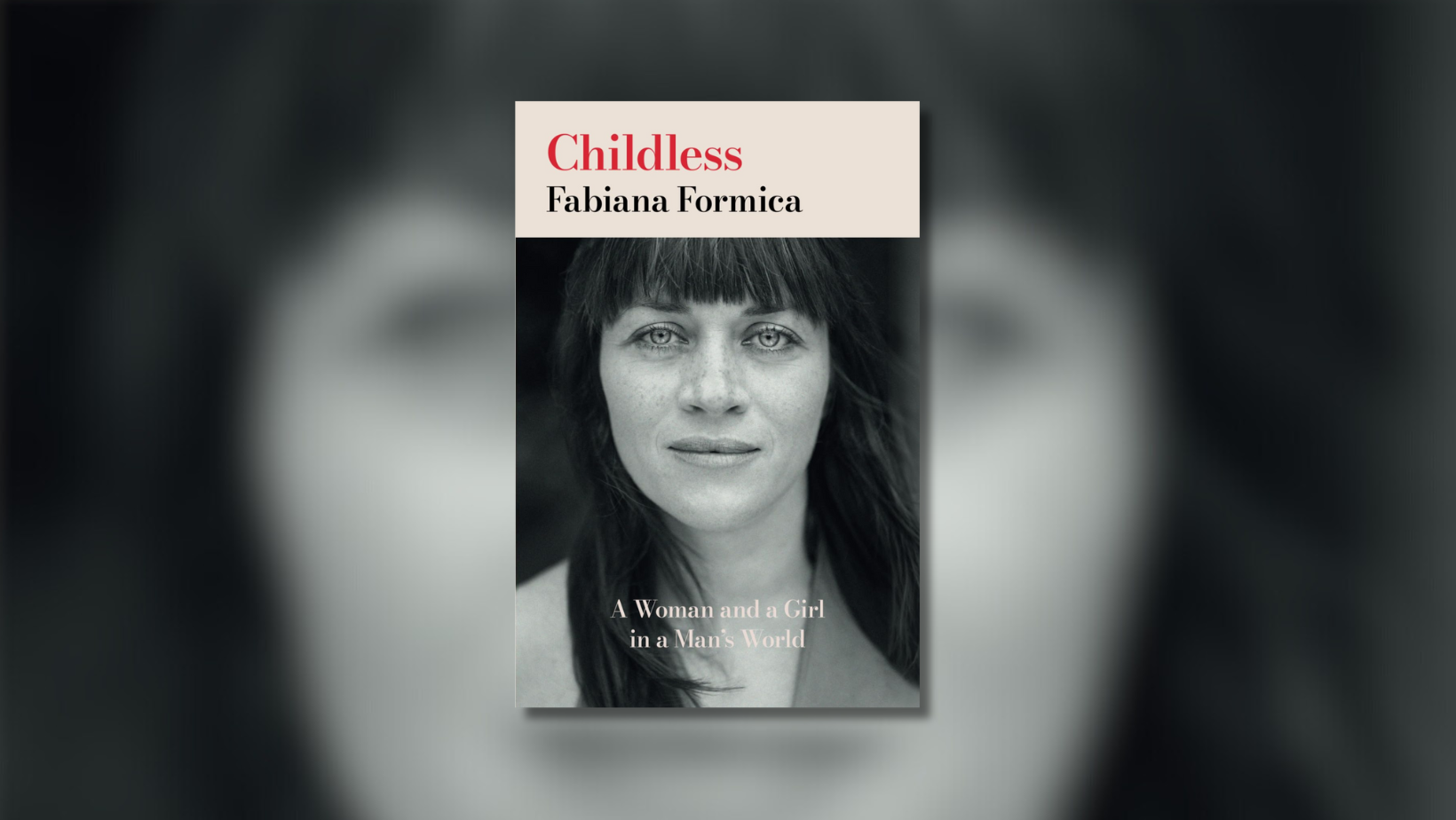
Fabiana Formica, Childless: A Woman and a Girl in a Man’s World (Nianima Press, 2025)
Fabiana Formica, Italian-Romanian-American artist, actress and journalist, debuts as a writer with Childless: A Woman and a Girl in a Man’s World (Nianima Press, 2025, in English). Addressing an “imaginary daughter”, a sweet unfinished daughter, named Nia after her recently deceased grandmother, the protagonist explains why she decided not to be a mother and how she freed herself from the patriarchal expectations that still nail women to the role of mothers today.
Review by Claudia Mazzilli
Fabiana Formica, Italian-Romanian-American artist, actress and journalist, debuts as a writer with Childless: A Woman and a Girl in a Man’s World (Nianima Press, 2025, in English).
In the book, a woman asks herself (and us) about the different opportunities and possibilities of becoming a mother (single woman motherhood, using her own frozen eggs… motherhood in the traditional couple…). The story is divided into four sections, in which they narrate the Fabiana of the present and her alter ego of the past, Valerie, less aware of the woman that Fabiana, now in her early forties, feels she has become.
Addressing an “imaginary daughter”, a sweet unfinished daughter, named Nia after her recently deceased grandmother, the protagonist explains why she decided not to be a mother and how she freed herself from the patriarchal expectations that still nail women to the role of mothers today. From the grandmother to the imaginary daughter (a male child appears “inconceivable”, in the flesh and in thought), the narrative proceeds through personal events and family traumas along a matrilineal line, exploring the link between identity, maternal love and the desire for motherhood or non-motherhood.
The struggle to juggle different careers (as a journalist and artist in London), the search for financial independence from male figures (whether her father or partner), and the pleasure of travelling to escape the hustle and bustle of the city already paint an effective picture of the protagonist in the opening pages: curious, strong-willed, hungry for freedom, but also inclined to look inside herself, into her own shadows, into the pain of loneliness, perceived as an unbearable threat, into the (physical, visceral) desire for a child that surfaces unexpectedly during the civil marriage ceremony and then, mysteriously, implodes with a resounding “No!” from her husband to the request to try and conceive. On the other hand, that desire had come as a surprise: “Until then, being a mother had been an affront to my future, an obstacle to my destiny, a useless burden on my presence in the world, a presence that I envisaged as very different from that of my mother. […] I’d dressed in armor and held out a shield to protect myself from the temptations of the heart and from the fate that had descended on that influential person who’d been my first example of a woman: the one I’d called Mother” (p. 6). Yes, her mother, who had been a teacher of French literature in New York: if her daughter asked her to talk about her favorite books, her mother replied with pungent self-irony that she no longer remembered anything, and that she only knew how to wash the dishes and do the shopping.
As in everyone’s life, rational choices and latent desires alternate and intertwine in different circumstances, in balances that are renegotiated from time to time, in established relationships and unfinished or unresolved loves, in the different places where life takes us (reiterating Fabiana’s family history, marked by emigration and relocation). Because Sun and Moon, light and shadow, are both necessary and weave harmonies and disharmonies that are mobile and complementary. Writing is also a form of “bringing to light”: it is the political act of connecting one’s own unique and unrepeatable life to others, overcoming censorship and taboos.
Through a broadly non-fiction narrative, Fabiana Formica’s book offers a story of healing guided by self-reflection, psychological introspection, and the reading of ancient and modern classics (the four sections of the book are introduced by enlightening quotations from Rebecca Solnit, Pico della Mirandola, Virginia Woolf, Carl Jung, and the entire book opens with a magnificent Chinese proverb: “the time to influence the life of a child is 100 years before it is born”), but above all by an unshakeable faith in human solidarity: joking about her surname, the very act of storytelling is conceived as the laborious and cooperative action of an ant. Writing is sharing one’s experience so that it may be useful to others and oriented towards a better world, soon to be founded in utopia.
“Imagine a world with no competition, no subjugation, no hierarchies, no exploitation, and no fear. Imagine a world where power is shared with others, without patriarchal political and religious institutions. Imagine a world where women are venerated, and where time is spent in peace and the blossoming of art. Imagine a society where learning is a process, not a destination. Imagine a culture where an entire community embraces the role of your father, mother, grandmother, and grandfather. […] Imagine a civilization of wisdom where Mother Nature is the eternal abode of the sacred, and where man isn’t an expropriator.” (p. 181).
Never before have we needed such a world as we do now, and we need not only to imagine it but to start building it.
